Standing on the Shoulders of Giants

Updated: Aug 4
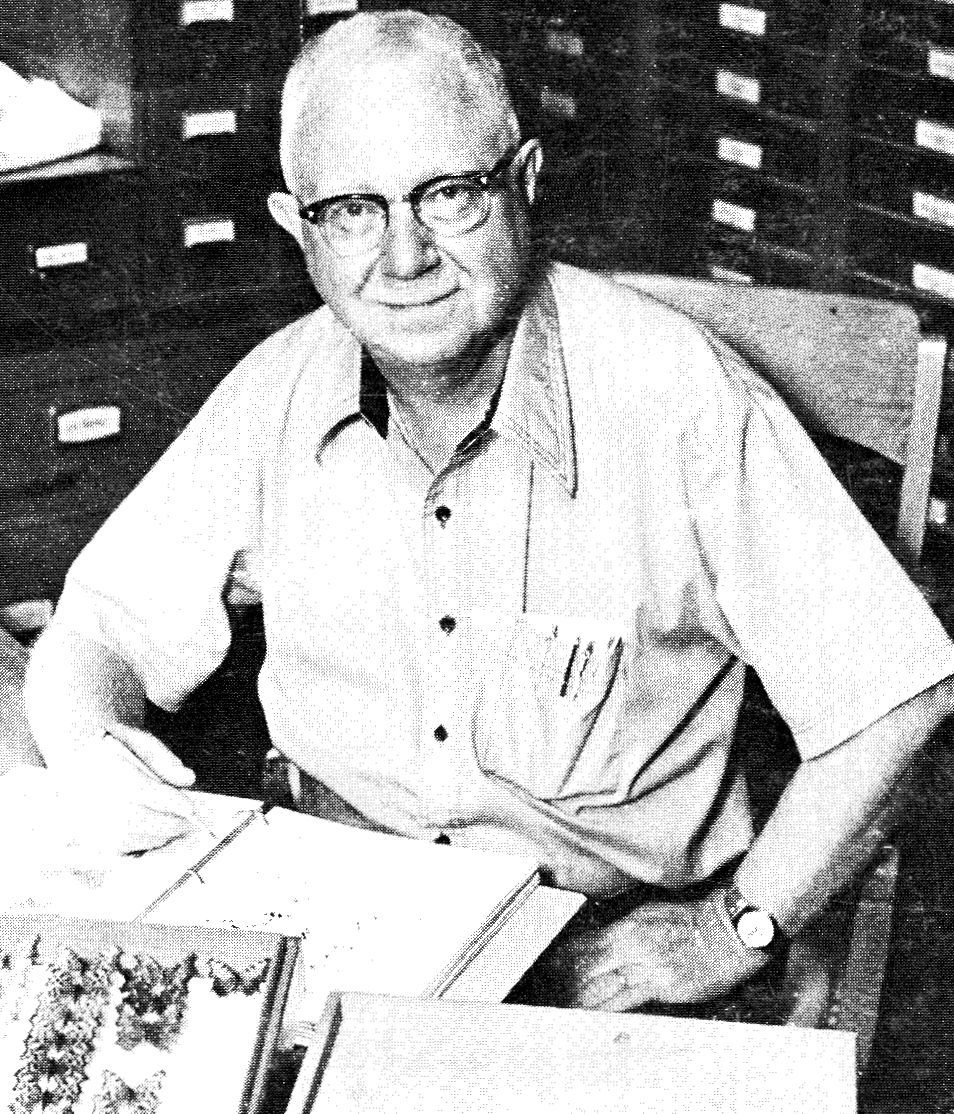
Back in 2001, when I hadn't yet realized that I was embarking on a 25-year project of documenting Oregon butterflies, I had a simpler, more immediate idea. I had simply decided that I wanted to go out and find butterflies in Oregon that I'd never seen before. Being of reasonably sound mind, I knew I couldn't just throw my camping gear in the car, toss some food in a cooler, and jump in the car and start driving around. I needed to have some kind of plan, including some notion of where these butterflies I'd never seen might be found. Enter Ernst Dornfeld, or, rather, enter his 1980 book The Butterflies of Oregon. Dornfeld was a Professor of Zoology and the Chair of the Zoology Department at Oregon State University for more than 20 years, and he ended up devoting a lot of his time to exploring Oregon for butterflies.

I'd heard of his book from other butterfly enthusiasts, and I was able to track down a used copy of the now out-of-print classic that had been surplussed by the Spokane Public Library. It quickly became my "bible" of Oregon butterfly spots. In the chapter called "Oregon's Physiography and Butterfly Distribution," Dornfeld describes key locations for butterflies within 10 physiographic provinces in Oregon. I took notes furiously and made lists of the sites that sounded most promising. These first site lists informed my first forays out into the wilds of Oregon in search of our state's butterflies, and helped me learn some good locations that would visit repeatedly. Dornfeld also described some sites that no longer existed more than 20 years later, invaded by native trees that shaded formerly open areas.

It was only recently that I realized that some photos in Dornfeld's book of a tall bearded man wielding a butterfly net out in the field were of Dornfeld's good friend, John Hinchliff. Hinchliff was an architect in Portland, Oregon, well-known in architectural circles for the prominent public buildings he'd designed. Although I'd had an interest in architecture during my university days, it wasn't Hinchliff's architectural prowess that brought him to my attention. Hinchliff, like me, was a non-scientist who'd been bitten by the butterfly bug. He got that bug so bad, that he ended up leading a regional effort to create a published inventory of all the species of butterflies found in Oregon and Washington.
This effort was inspired by the work of British lepidopterist John Heath, who in the early 1980's created a butterfly inventory document covering all of the United Kingdom. In 1994, eleven years after his friend and mentor Ernst Dornfeld passed away, Hinchliff had taken that inspiration and run all the way to the finish line, completing and releasing the Atlas of Oregon Butterflies, which he dedicated to Dornfeld.

Where Dornfeld's book had included small distribution maps of butterfly records for each species, Hinchliff's atlas took the effort much further. Hinchliff and crew collected a much larger set of verified butterfly records, over 24,000 of them, and mapped them out to the subspecies level on full page black and white maps.
I bought my copy of An Atlas of Oregon Butterflies at the Oregon State University Bookstore in about 2003. Immediately I found myself doing my best to extrapolate Hinchliff's map dots to actual locations on state maps and National Forest maps. These dot-smattered maps showed me both approximate locations species, as well as locations where butterfly records of multiple species were more concentrated, pointing to possible "hotspots" and corroborating many of the sites Dornfeld described. Now we're cooking with gas! Well, maybe not yet quite cooking, maybe more like prepping for the cook, but definitely serving up some great learning for me in my fledgling butterfly chasing endeavor!
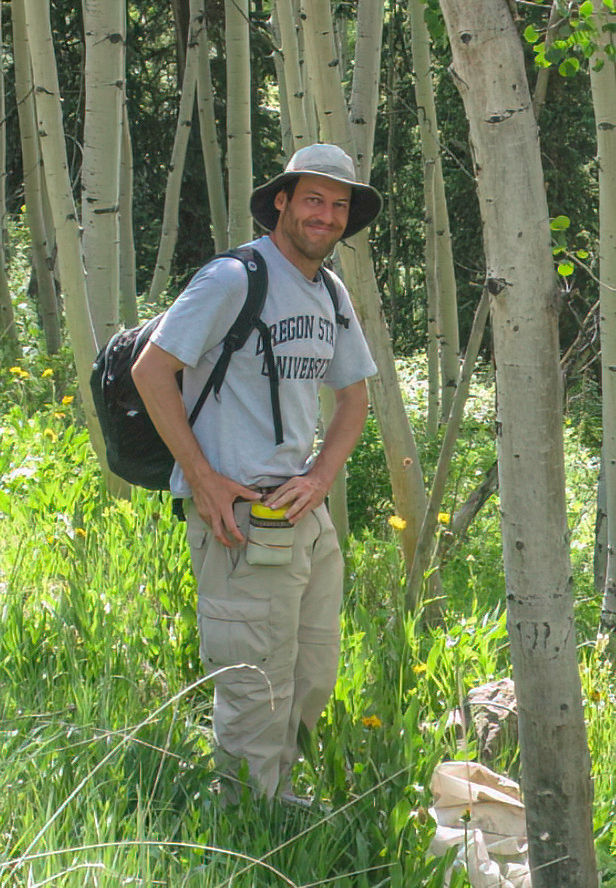
It wasn't much later (still early 2000's) that I met Andy Warren, then an entomology PhD candidate in the Department of Zoology at Oregon State. He was doing what I wanted to do (scour the entire state for butterflies), but he was doing it on a much larger scale, in a much more systematic way, and with the clear purpose of furthering our collective scientific knowledge of Oregon butterflies for what would be his doctoral dissertation. When I spoke with him, he seemed to have gone EVERYWHERE in Oregon and to have seen every species of Oregon butterfly multiple times!
That year I felt like I stuck to Andy like a leech, interviewing, poking, and prodding him for information about locations for all the butterfly species I didn't know where to find. A whole spreadsheet emerged from my conversations and email correspondence with Andy. By this time I had found and photographed more than 110 species in Oregon, but the challenges were growing ever greater to find and photograph the next new species. Andy's detailed guidance led me to many new species over a few years' time--a great gift of knowledge that made my own effort immensely more efficient and much less time consuming.

In 2005, Andy finished his dissertation, and published it as "Butterflies of Oregon, Their Taxonomy, Distribution and Biology." This tome was another massive leap in the availability of published information about not just Oregon's butterflies and where they are found, but also the key information known about their taxonomy and biology, including larval host plants, preferred habitats, and key locations in many cases.
Now we really were cooking with gas! I have used my hard copy of this book so hard that the binding is in shreds, and I now rely on a digital copy for my frequent consultations. Having spent many summers over a 25 year period chasing butterflies all over Oregon, I now have a pretty good feel for just how huge Andy's effort was to create this book. It was really monumental.
Now let's take a moment to flash back to 1994, when Hinchliff's Oregon Atlas was released at the regional gathering of lepidopterists in Corvallis. My friend and colleague Jeff Miller was at that meeting when Hinchliff released the Oregon Atlas, and he was so enthused about what he had seen and heard that he found Hinchliff at the next break and proposed a next step to further Hinchliff's effort: to convert all of Hinchliff's hand-written records (which filled 17 three-ring binders) as township-range-section locations in an Excel spreadsheet, which could then be converted to latitude and longitude points, and ultimately mapped electronically. Hinchliff loved the idea, and Miller left that meeting with a mission.
Between 1996 and 2000, Dana Ross and Jeff Miller, worked steadily on the project with help from Scott Sundberg of the OregonFlora project, and Jon Kimmerling of the OSU Geography Department. In late 2000, the team printed their first set of maps, and working from the digital data on Jeff's computer. Shortly thereafter, something happened that they hadn't planned on.
Jeff Miller's computer crashed, motherboard, hard drive and all, and the data went down with the ship. Luckily, Miller made back-ups of his files! Unluckily, about that time a decision was made to dismantle the Department of Entomology, and so the back-up files for that program were deleted in preparation for that dissolution, including the spreadsheets holding Hinchliff's data! Oh the pain! A "crushing double whammy" as Jeff called it. All that was left of the digital data, was a towering stack of 3.5" floppy disks.
Now we fast forward 18 years to 2018, when Miller, who had retired in 2015, and having recovered from the shock of the millenium data disaster, and with new resolve, pulled the data from that multitude of floppy disks onto his new and improved computer, with more advanced software. Then in 2020, as the COVID pandemic landed in Oregon, Miller needed a project during those days of self-imposed isolation, so he dove into to the project and began cleaning up the data and adding more records to the file.
I wasn't aware of Miller's project until October of 2023, when I had a conversation with Jeff at the Northwest Lepidopterist Workshop in Corvallis. He told me he wanted to create a new and improved Oregon butterfly atlas, and dedicate it to John Hinchliff, and he told me how he thought I could contribute. He said he was very motivated to overcome that setback in 2000, and I could see the resolve in his eyes and I could hear it in his voice. He meant business.
Jeff knew that I had amassed a collection of thousands of Oregon butterfly records and photographs over a 20-year effort, which I had meticulously documented and organized in a database I had created from scratch. When he asked me about the data and photographs, I immediately offered them in support of his project. I had also reviewed thousands of butterfly sightings with photos that had been posted to iNaturalist.org, which also added to the collection that Jeff had already organized from other sources.
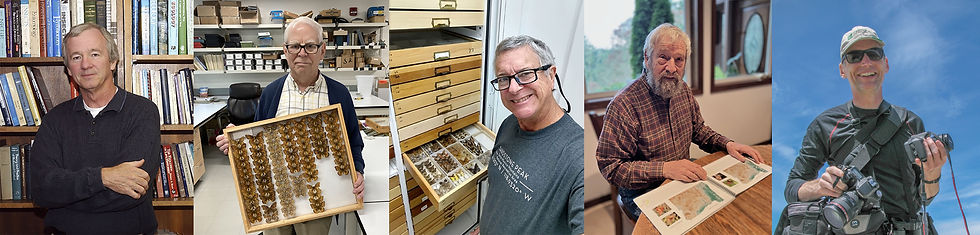
Over the next three years, Jeff and I exchanged emails and data, and drafts of some sections of the atlas. Over those years, I marveled at Jeff's stamina as he plowed through stage after stage of the book project, overcoming one hurdle after another. Having done a couple butterfly book projects myself, I knew how grueling it can be to keep sitting down at the computer, day after day, chipping away at all the researching, writing, layout, editing and all the rest. Jeff's dogged determination, the countless hours he invested, and the
team he assembled to review and edit the work got the new Oregon butterfly atlas done.
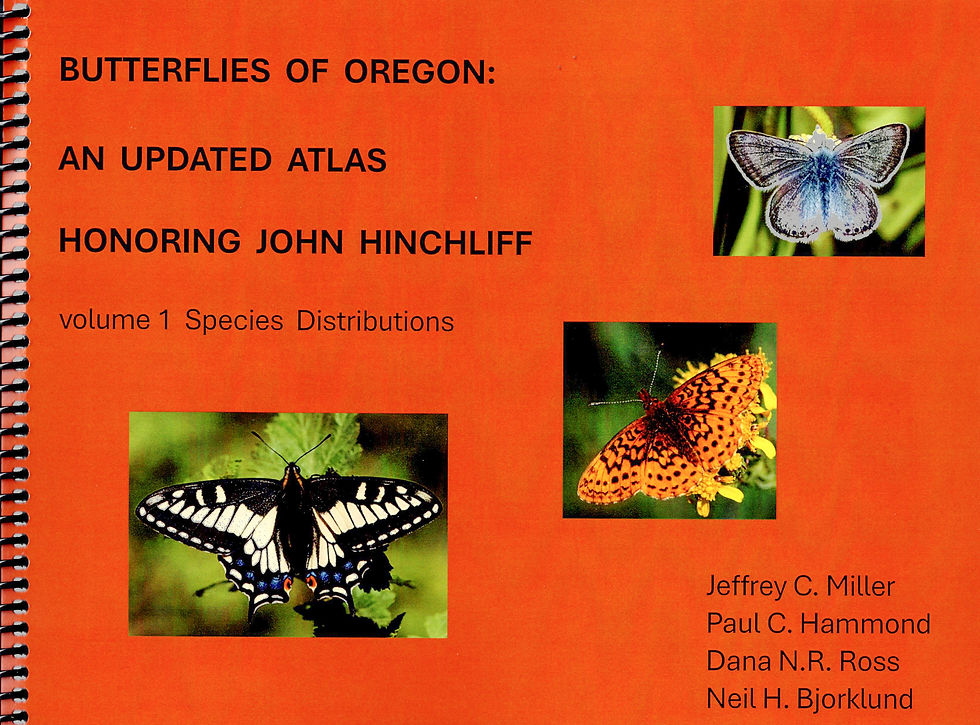
On April 10, 2026, Jeff picked up the first print run of 300 sets of the two volume set from the printshop. Twenty-six years after he committed to John Hinchliff to do this project, he had completed it and gave all of us another monumental reference book about Oregon's butterflies and where they live, and much more. As Hinchliff did with Dornfeld's work, he took the state of the "art" several steps further: massively increasing the number verified butterfly records, creating beautifully detailed full-color maps, including color photos of each species, and adding a narrative with key information about the distribution of each species. Then he created an amazing and interesting second volume, which he called simply "Synthesis." Here he conducted some fascinating analyses of the data he collected, and presented much of it on gorgeous full-color maps. For anyone with a deep interest in Oregon butterflies, this is a must-have two-volume set!
The groundwork laid by Dornfeld, Hinchliff, Warren and many others lives in Jeff Miller's new work. From my vantage point, Jeff is now standing shoulder-to-shoulder among those giants whose works form the pillars on which future authors will stand, to take the state of the art to the next level.
Thank you Jeff for your determined drive to bring this treasure trove of information on Oregon butterflies to fruition, and thank you for inviting me to be a part of it. It's been an honor and a pleasure.
Visit this page for more information on "Butterflies of Oregon: An Updated Atlas Honoring John Hinchliff," and how to order your copy.
Thanks so much for reading!
NB


